Membrane
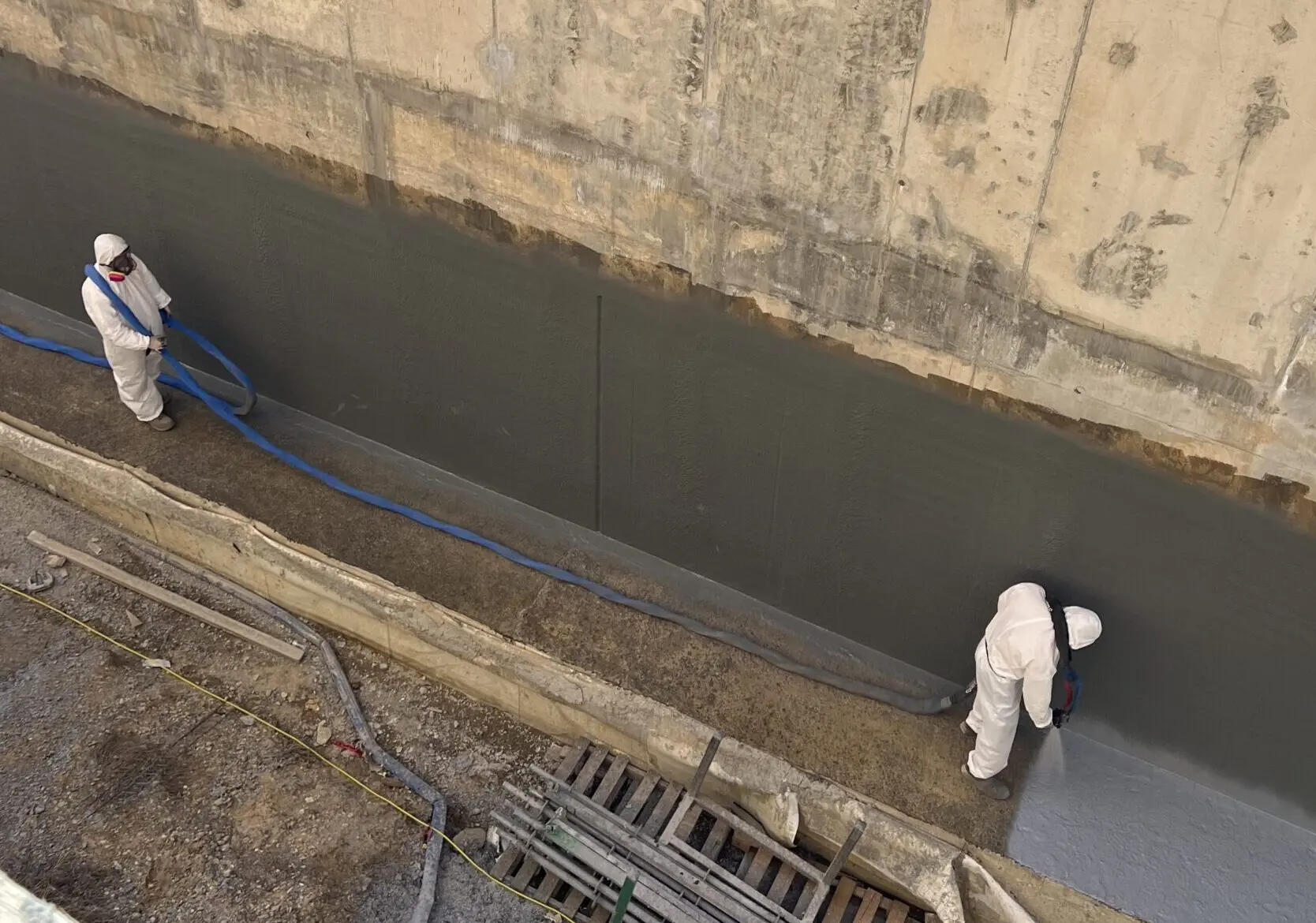
Applied through specialized mobile spray equipment at a precise 1:1 ratio, polyurea cures rapidly to form a seamless, highly durable waterproofing membrane that bonds directly to concrete and other approved substrates.
Polyurea is a high-performance, two-component waterproofing material used to protect commercial and industrial structures from moisture intrusion
Applied through specialized mobile spray equipment at a precise 1:1 ratio, polyurea cures rapidly to form a seamless, highly durable waterproofing membrane that bonds directly to concrete and other approved substrates.
Because polyurea is spray applied and cures quickly, it offers a practical alternative to traditional hot-applied waterproofing systems. It delivers exceptional durability while eliminating many of the safety concerns and labor-intensive processes associated with heated waterproofing materials.
At Apex Building Company, our experienced crews utilize mobile spray rigs that allow us to efficiently install polyurea in areas where traditional hot-applied waterproofing may not be practical due to accessibility, project logistics, or site conditions.
Apex Building Company proudly provides commercial and industrial polyurea coating systems throughout multiple regions.
Our Nashville team installs commercial polyurea coating systems for foundation walls, below-grade waterproofing, and structural concrete applications throughout Middle Tennessee.
Our Memphis team provides polyurea coating solutions for commercial construction projects requiring durable spray-applied waterproofing systems.
Our Dallas team installs polyurea coating systems for commercial and industrial projects where seamless waterproofing and efficient installation are essential.
Our Orlando team provides polyurea coating applications for foundation waterproofing and other commercial building envelope systems designed to withstand Florida’s demanding environmental conditions.
Owners, architects, and general contractors ask us the same handful of questions about polyurea coatings — what the material is, how it compares to hot-applied systems, where it gets installed, and how our mobile rigs reach hard-access areas. Here are the answers we give most often.